
Part 1: AI in Healthcare Has a Data, Not Intelligence, Problem
What are healthcare organizations discovering after actually trying to deploy agentic AI? Are systems able to assemble a complete picture of the patient?
Part 2: Do Healthcare Organizations Actually Control Their Own Data?
Before healthcare asks how powerful AI will become, it must answer a simpler question: Can we actually access and account for the full patient record?
Ambient AI Documentation Works. We’re Measuring the ROI Wrong
Rethink ROI for ambient AI documentation: the real value lies in clinician well-being, adoption, and care quality—not just time savings or productivity metrics.
Weaving a Unified Fabric of Care Will Heal the Patient-Provider Relationship
Healthcare transforms when strategy, workflow, data, and human connection unite around one purpose: strengthening the care relationship.
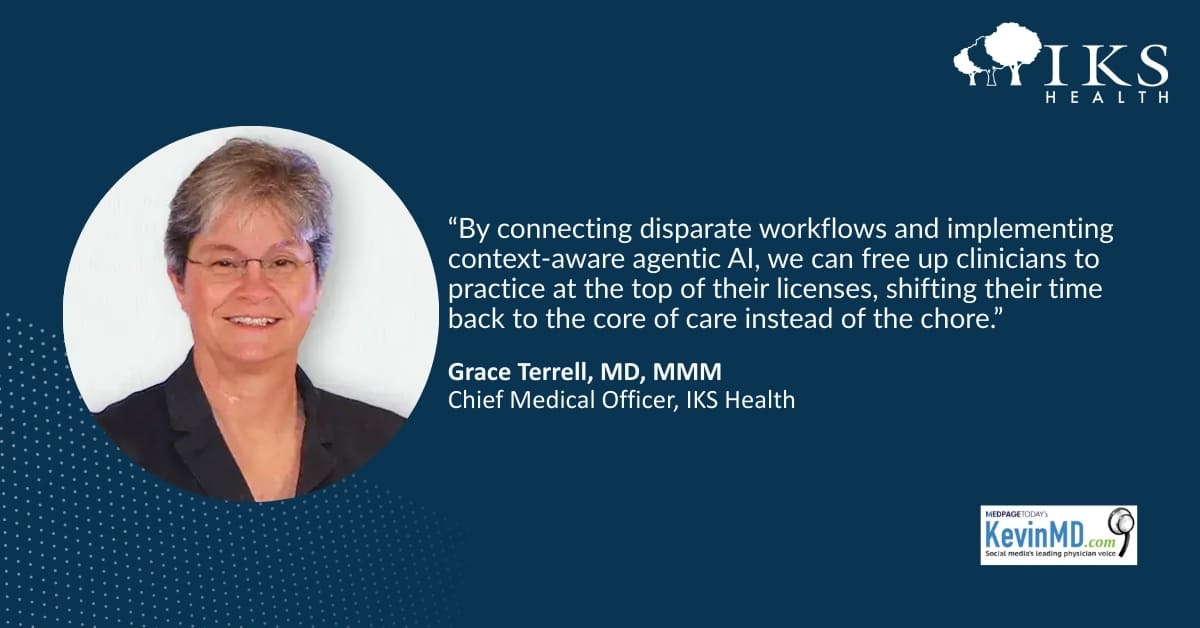
Connected health care workflows: From chore to core patient care
Connected health care workflows and AI can reduce administrative burden. Learn how integrating systems moves clinicians from chores back to core patient care.
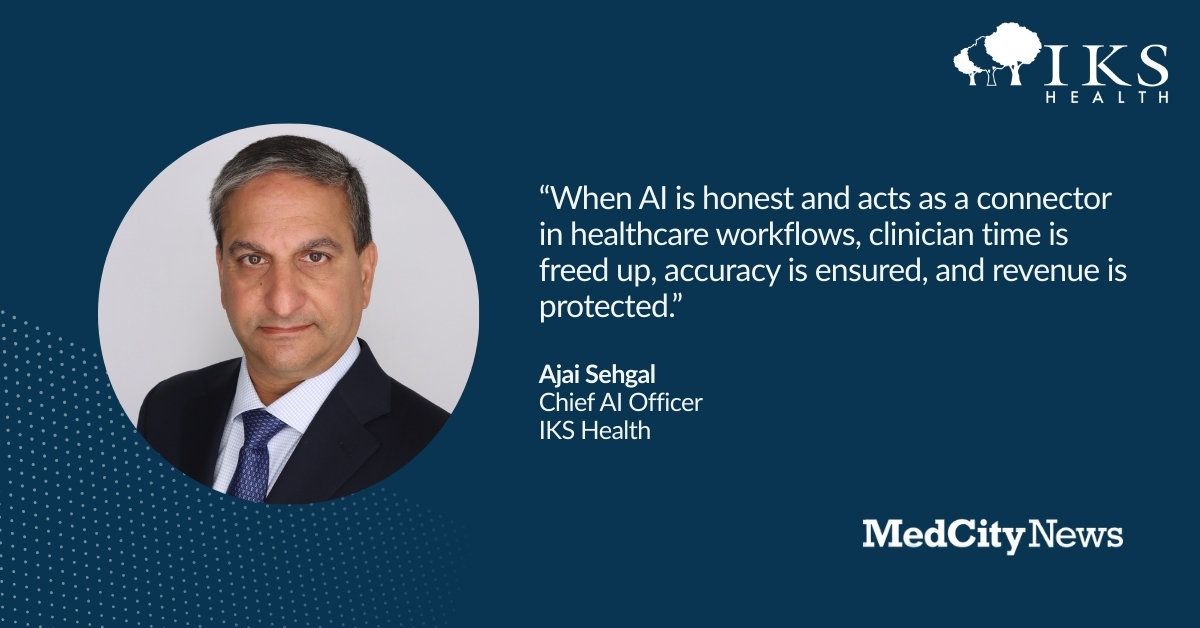
Keeping Honest in Healthcare: Engineering Accountability into AI
AI is a tool. Humans are accountable. But we can engineer accountability into AI systems by prioritizing data integrity, human oversight, and continuous learning.

Artificial intelligence offers a lifeline to overwhelmed clinicians [PODCAST]
Dr. Christina Johns highlights AI as a support tool—not a replacement—by reducing documentation and coding burdens so physicians can focus more on patient care.
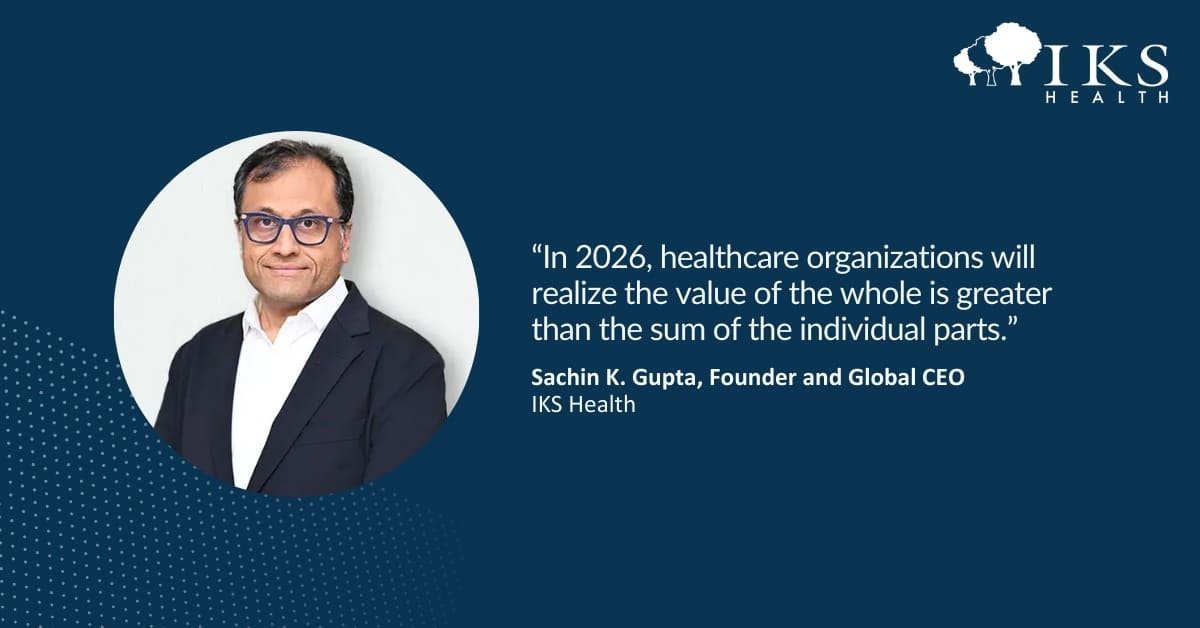
Part 1: The End of Healthcare Hype and What 2026 Will Demand
As healthcare kicks off in 2026, it’s shifting from AI experiments to accountable transformation, where tech, models, and partners must deliver measurable results.
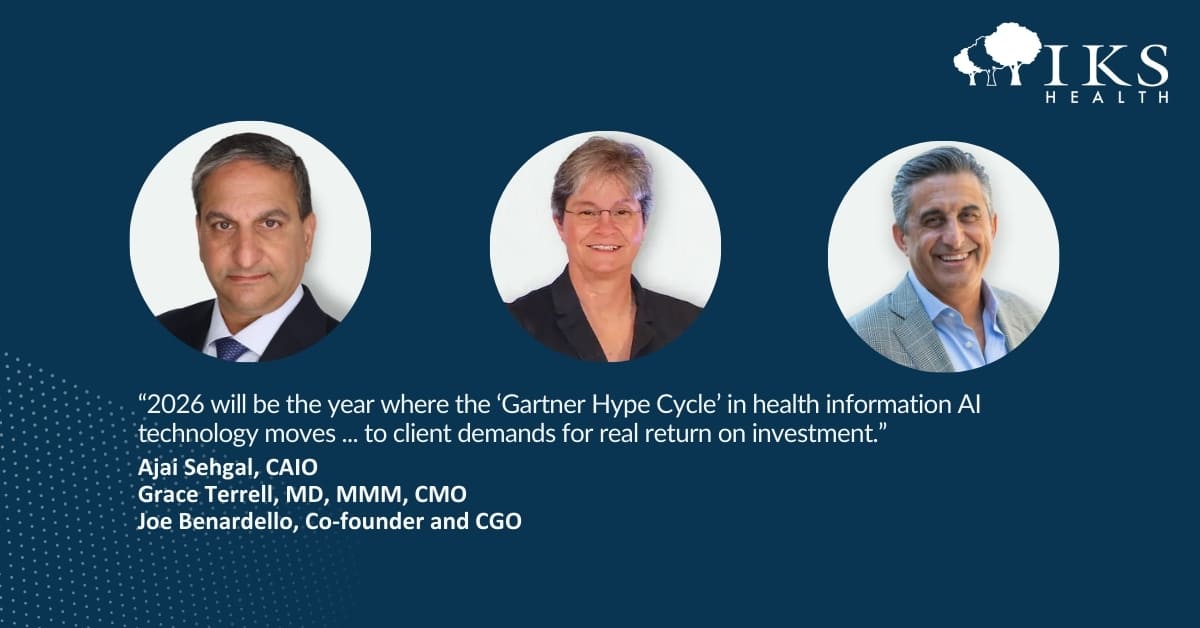
Part 2: The End of Healthcare Hype and What 2026 Will Demand
Part 2 features three IKS Health leaders sharing 2026 insights on AI, automation, accountability, workflow integration, and revenue cycle management.